

Current Courses are marked with an *
-
This course is designed to be an overview of the human body on a molecular, cellular, tissue, and organ system level. Emphasis is placed on the integration of the body systems into a coordinated whole and the correlation of anatomical structure with physiological function.
-
Astrobiology is an integrated lab science course that addresses the questions “Is there life elsewhere in the universe? What is life’s future on Earth and beyond? How did life originate on Earth?” We will study fundamental concepts from many of the science disciplines — biology, chemistry, physics, astronomy, and earth science — in order to explore these very complex topics. In recent years, astrobiology has become the focus of a significant amount of academic research, and we will be investigating both the latest findings and the nature of the scientific methods researchers employ in this field.
-
This class is designed to explore the workings of living organisms on multiple levels, including molecular, cellular, organismal, and ecological, and to explore overarching themes that connect each level to the next. Four interdisciplinary units — the bubonic plague, cancer, viruses in the body, and the Serengeti Plains — serve as frameworks to explore topics such as cell structure and function, genetics, molecular biology, energy transformations, evolution and classification, biochemistry, and biodiversity. Current scientific research is introduced throughout the course, and students will explore the development of scientific thought and its applicability to situations and problems faced by society today.
-
This one-semester course will provide students with an in-depth exploration of the science of plants. The plant kingdom contains an incredible diversity of organisms, with hundreds of thousands of known species. Along with algae and cyanobacteria, plants have the ability to convert energy from the sun into usable chemical energy through photosynthesis, forming the basis of all ecological food chains, including our own. Students will become familiar with plant taxonomy, keep a field journal, and learn to identify plants in the field. They will also gain an understanding of plant evolution, physiology, and ecology, and study recent molecular research in the field, which has helped to reveal new details about plant genetics, cellular function, and classification. Finally, students will experiment with cultivating plants in the lab and outdoors, observing plant growth and development first-hand.
-
EXPLOSIONS! DANGEROUS GAS! RADIOACTIVITY! You will not experience any of these in my chemistry class. But we will talk about all of them, where they come from, and what is actually happening on the atomic level. You will, however, get to light stuff on fire, safely, and boil a lot of water. This chemistry lab course is a study of the fundamental building blocks of matter, the elements. We study proper measurement and lab techniques, properties of matter, behaviors of gases and water, and then describe chemical compounds and their reactions. This lab course will help you ask and answer questions about what our world is made of.
-
The computer is an increasingly important tool in almost every field and industry today. It is becoming vital for today’s youth to learn how to adapt to this changing society, and knowing computer coding is a great way to do so. Starting from the ground up, this course is an introduction to programming and computer code. We will explore how the computer can be used to solve complex problems through the learning and practice of a popular computer language called Python. By the end of the course, students will be able to structure programs to fit their individual needs, enabling them to use a computer in a variety of new ways. We will also discuss the importance and integral nature of computer science and how it affects our lives in this age of technology we live in.
-
In this class, we will take a hands-on approach to physics topics through the lens of engineering. Students will develop a familiarity with technical drawing and with the engineering design process including the steps of prototyping, iteration, and intentional communication of results. The main uniting topics of structural design, vehicle anatomy, and modern electrical and light innovations will help us uncover the mysteries of torque, springs, tension and compression, the electromagnetic spectrum, energy conservation, and the optimization of user experience. The students will do individual research projects on innovations and technology as well as group design projects such as boat and bridge design, spring-powered cars, and 3D modeling for fused filament fabrication.
-
As the human population grows larger and standards of living rise around the world, it is important that we understand the impacts of human activities upon the earth’s natural systems. While many environmental concerns span multiple disciplines, a strong grasp of the underlying science is essential for today’s environmental problem-solvers. In this class, we will explore environmental issues that are both global and local in scale, with an emphasis on understanding the physical, chemical, and biological basis of each issue. We will also make connections throughout the course to larger ideas such as sustainability, environmental ethics, and environmental justice.
-
Food serves as one of humankind’s strongest connections to the natural world, yet most modern humans live their lives far removed from the agricultural process. As the global population has grown, the production of food has required more and more resources and resulted in enormous environmental impacts. Today’s food system faces considerable challenges, not least among them the advance of climate change and the continued struggle against embedded racial and economic injustices. This class will attempt to answer the following question: How must our food system change in order to address these crises and become both more sustainable and more just in our complicated world? As we investigate, we will dig into the science and environmental impacts of growing, making, distributing, and eating food, and examine the relationship between climate change and agriculture. At the same time, we will discuss social justice issues inherent in the food system, including farmworker rights, racial discrimination, food access, and hunger, among others. Work in this class will include regular readings, writing assignments, class discussions, short presentations, and occasional quizzes. In addition, students will be asked to design, build, plant, and tend their own small garden throughout the semester, while documenting the process in a journal (including writing, drawing, and/or photographs). Materials will be provided as needed.
-
During this one-semester course, students will explore our multi-faceted global food system, tracing the production of food from farm to plate. We will begin with a discussion of agricultural science, learning about different types of farm operations for growing both crops and domesticated animals for meat. Next, we will deconstruct the food system, examining the processes and institutions involved, and addressing the environmental and societal impacts of food. Finally, we will look at the science of eating and nutrition. Students will experiment with cooking, visit a grocery store, and learn to critically analyze nutrition “science” in the news. During each unit, we will discuss social justice issues inherent in the food system, including farmworker rights, food access, and hunger. We will also touch upon other topics such as food safety, genetically modified organisms, agricultural economics, public policy, and the future of food production. Throughout the course, we will explore the idea that eating serves as one of humankind’s main connections to the natural world.
-
In this class, we will take a hands-on approach to physics topics through the lens of engineering. Students will develop a familiarity with technical drawing and with the engineering design process including the steps of prototyping, iteration, and intentional communication of results. The main uniting topics of structural design, vehicle anatomy, and modern electrical and light innovations will help us uncover the mysteries of torque, springs, tension and compression, the electromagnetic spectrum, energy conservation, and the optimization of user experience. The students will do individual research projects on innovations and technology as well as group design projects such as boat and bridge design, spring-powered cars, and 3D modeling for fused filament fabrication.
-
Introduction to Engineering will allow students to experience the engineering design process and investigate its role in the community. Multiple projects throughout the semester will expose the class to various areas of engineering (such as electrical, mechanical, and civil) using a hands-on approach. They will be responsible for researching the issues, imagining possible solutions with their classmates, creating a prototype from a promising solution, testing and evaluating the resulting prototype, and restarting the cycle by improving and iterating their design. Teamwork, critical thinking, optimization, analysis, and remaining within specific constraints will drive the design process in our classroom.
-
In Materials Science, we will study both the history and recent innovations of a variety of materials including metals, ceramics, polymers, and composites. Materials Science will focus on how the processing of a material impacts its chemical structure and determines the material’s properties and performance. We will look at examples of these materials, explore the best uses for each, and investigate what it takes to push each group to failure. Materials Science is a semester-long course.
-
Plants are amazing! They capture the sun’s energy through photosynthesis and form the basis of all ecological food chains, sequester carbon, provide chemical compounds for human medicine, and on top of all that, they are beautiful! We will study botany, through which we will learn species identification and classification, plant physiology, genetics, and evolutionary history. We will examine and identify Roanoke’s native species out in the field as much as possible, learn to keep a field journal, and grow and observe our own plants in a controlled setting.
-
Balls, cars, planets, elevators, planes, pucks, and people all move in different ways because of the forces acting on them. In physics, we will study the different motion types of these various objects and their driving forces. Experiments and discussion of results are the main components of this course that guide our discovery of the mathematical models used to predict motion. We will use graphs and equations to apply our specific observations of cars, springs, and marbles to general cases. Topics covered will include inertia, momentum, gravity, projectile motion, and friction.
-
This course is intended to provide a survey of fundamental concepts in the field of psychology. We will explore the history of psychology as a discipline, learn how to design effective psychology experiments, explore careers in psychology, and survey the major areas of study in the field today.
-
Roanoke Field Studies is an experiential field-based course that will explore environmental issues in the Roanoke area through field trips and meetings with local scientists and professionals. The first part of the course will cover the natural history and ecology of the Roanoke region, and the second part of the class will focus on Roanoke’s impacts upon the natural world, and how individuals and organizations are currently working to reduce those impacts. We will visit a variety of ecosystems, carry out field experiments, look at how we use natural resources, and examine what it means for a city to be sustainable. The class will also plan and conduct interviews with environmental professionals working at the intersection between science, public policy, economics, and law. Students will be evaluated based on class participation, field journal assignments, short papers, group/independent projects, and a final exam each semester.
-
This course will examine the interplay between the scientific world and society at large. We will start by exploring how the modern scientific enterprise works through the lens of research on addiction and mental illness. Afterwards, we will investigate how science interacts with the law, how it informs government policy, how science intersects with the media, and conversely how all three areas affect the practice of and societal perceptions of science.
-
Video games are a main media source for much of the western world, particularly the younger generation. From the dawn of modern day computers, creators have used this medium to push past the boundaries of passive entertainment, into the world of conflict, strategy, and ultimately achievement. Although such a common pastime, very few understand the workings of designing the masterful works of art. This course will aim to give a glimpse into the world of designing a video game.
Students will begin by learning the basic capabilities of the popular video game editor Unity. As proficiency progresses, they will then have the opportunity to come up with a game concept, and implement their skills to make it come to life. By the end of the semester, students will have a working, playable, game that they can be proud of. In addition to this hands-on experience, we will also learn about the history and aspects of the video game industry. This will give students an idea of types of careers and pathways this budding industry could provide.
-
In the 4th century BCE, Aristotle stated that “if someone considers the study of the other animals to lack value, he ought to think the same thing about himself as well.” This course will cover the full range of the animal kingdom from the most ancient to the most recently-evolved. In the first semester, we will study the basic functions that all animals possess (respiration, digestion, reproduction, etc.); in the spring we will explore how different phyla have evolved their own solutions to these fundamental requirements.
-
This course explores various psychological disorders in adults. Students will gain understanding of criteria, risk factors, causes and treatment options for psychological disorders. After an introduction into the history of abnormal human experience and various frameworks for evaluating abnormal behavior, the class with dive into the specifics of the major disorders as defined by the Diagnostic and Statistical Manual-5th Edition (DSM-5). We will have various labs/activities during the course of the semester to bring home relevant issues in diagnosis and treatment of mental disorders. Through a semester long project, students will demonstrate in-depth understanding of one aspect of abnormal behavior through independent or group study of their own design.
-
This course is designed to be an overview of the human body on a molecular, cellular, tissue, and organ system level. Emphasis is placed on the integration of the body systems into a coordinated whole and the correlation of anatomical structure with physiological function.
-
This advanced biology course prepares students to take the AP exam in biology. The College Board has identified four “big ideas” that are unique to biology as a science, and topics such as the scientific process, biological chemistry, cells, energy conversions, meiosis and mitosis, heredity, gene chemistry and function, biotechnology, evolution and speciation, organisms’ diversity, and ecology are presented within this framework. Experimental design is a fundamental part of the AP exam, and lab exercises emphasize using equipment and handling materials, careful measurement, data recording and presentation, statistical analysis, drawing conclusions and identifying limitations. Journal articles and recent news stories expose students to contemporary research. Students are highly encouraged to sit for the AP exam in May.
-
Astrobiology is an integrated lab science course that addresses the questions “Is there life elsewhere in the universe? What is life’s future on Earth and beyond? How did life originate on Earth?” We will study fundamental concepts from many of the science disciplines – biology, chemistry, physics, astronomy, and Earth science – in order to explore these very complex topics. In recent years, astrobiology has become the focus of a significant amount of academic research, and we will be investigating both the latest findings and the nature of the scientific methods researchers employ in this field.
-
This class is designed to explore the workings of living organisms on multiple levels, including molecular, cellular, organismal, and ecological, and to explore overarching themes that connect each level to the next. Four interdisciplinary units – the bubonic plague, cancer, viruses in the body, and the Serengeti Plains – serve as frameworks to explore topics such as cell structure and function, genetics, molecular biology, energy transformations, evolution and classification, biochemistry, and biodiversity. Current scientific research is introduced throughout the course, and students will explore the development of scientific thought and its applicability to situations and problems faced by society today.
-
This one-semester course will provide students with an in-depth exploration of the science of plants. The plant kingdom contains an incredible diversity of organisms, with hundreds of thousands of known species. Along with algae and cyanobacteria, plants have the ability to convert energy from the sun into usable chemical energy through photosynthesis, forming the basis of all ecological food chains, including our own. Students will become familiar with plant taxonomy, keep a field journal, and learn to identify plants in the field. They will also gain an understanding of plant evolution, physiology, and ecology, and study recent molecular research in the field, which has helped to reveal new details about plant genetics, cellular function, and classification. Finally, students will experiment with cultivating plants in the lab and outdoors, observing plant growth and development first-hand.
-
This course is taught using a Modeling curriculum in which we follow the historical discovery of chemical principles. This course is structured differently from a standard high school chemistry course. In traditional chemistry curricula, students are introduced right away to the modern model of the atom and asked to accept all its complexities as a matter of faith. By contrast, our approach is to start with a simple model of the atom and realize that our model must evolve as the need for a better one arises. By examining data and through carefully-tailored inquiry experiments, we will develop increasingly detailed models of the particulate nature of matter, the role of energy, chemical reactions, and subatomic structure.
-
The computer is an increasingly important tool in almost every field and industry today. It is becoming vital for today’s youth to learn how to adapt to this changing society, and knowing computer coding is a great way to do so. Starting from the ground up, this course is an introduction to programming and computer code. We will explore how the computer can be used to solve complex problems through the learning and practice of a popular computer language called Python. By the end of the course, students will be able to structure programs to fit their individual needs, enabling them to use a computer in a variety of new ways. We will also discuss the importance and integral nature of computer science and how it affects our lives in this age of technology we live in.
-
Cultural and Sociobiology explores the interactions between biology, individual choices and behavior, and culture — using addiction, an intensely studied field, as the framework. Scientists continue to uncover information about the inner workings of the brain, and many of their findings run contrary to commonly held wisdom. Is biology truly destiny? How does such knowledge affect individual beliefs and behavior? How does it affect societal norms and governmental policy? How should society deal with scientific information that is incomplete or contradictory? What are the ways that such information can be used and misused? Students will review basic biological and chemical concepts necessary to understanding the physical basis of addiction. Psychological, sociological, and anthropological concepts will be introduced as needed. Students will learn the current state of addiction research, and will study how scientific knowledge has (mis)informed historical decisions. Participation, debate, and critical thinking are expected and will be encouraged.
-
We will cover a comprehensive set of topics including geology, space science, astronomy, climatology and meteorology, and oceanography. The process of scientific discovery, how basic scientific concepts are used to explain complex phenomenon, and the interplay of large and complex systems and processes are some of the primary themes we will be uncovering through the study of the aforementioned topics.
-
This year-long course will provide an overview of current topics in environmental science. As the human population grows larger and standards of living rise around the world, it is important that we understand the impacts of human activities upon the earth’s natural systems. While many environmental concerns span multiple disciplines, a strong grasp of the underlying science is essential for today’s environmental problem-solvers. In this class, we will explore environmental issues that are both global and local in scale, with an emphasis on understanding the physical, chemical, and biological basis of each issue. We will also make connections throughout the course to larger ideas such as sustainability, environmental ethics, and environmental justice. During labs, projects, and other activities, students will gain hands-on experience both in the field and in the laboratory, and apply science concepts to real environmental problems in our community. Work in this class will include regular reading and writing assignments, in-class quizzes and tests, and occasional larger assignments (e.g., research papers, debates, group projects, long-term lab reports).
-
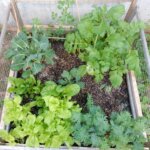
Food serves as one of humankind’s strongest connections to the natural world, yet most modern humans live their lives far removed from the agricultural process. As the global population has grown, the production of food has required more and more resources and resulted in enormous environmental impacts. Today’s food system faces considerable challenges, not least among them the advance of climate change and the continued struggle against embedded racial and economic injustices. This class will attempt to answer the following question: How must our food system change in order to address these crises and become both more sustainable and more just in our complicated world? As we investigate, we will dig into the science and environmental impacts of growing, making, distributing, and eating food, and examine the relationship between climate change and agriculture. At the same time, we will discuss social justice issues inherent in the food system, including farmworker rights, racial discrimination, food access, and hunger, among others. Work in this class will include regular readings, writing assignments, class discussions, short presentations, and occasional quizzes. In addition, students will be asked to design, build, plant, and tend their own small garden throughout the semester, while documenting the process in a journal (including writing, drawing, and/or photographs).

Read featured blogs from this class here. -
During this one-semester course, students will explore our multi-faceted global food system, tracing the production of food from farm to plate. We will begin with a discussion of agricultural science, learning about different types of farm operations for growing both crops and domesticated animals for meat. Next, we will deconstruct the food system, examining the processes and institutions involved, and addressing the environmental and societal impacts of food. Finally, we will look at the science of eating and nutrition. Students will experiment with cooking, visit a grocery store, and learn to critically analyze nutrition “science” in the news. During each unit, we will discuss social justice issues inherent in the food system, including farmworker rights, food access, and hunger. We will also touch upon other topics such as food safety, genetically modified organisms, agricultural economics, public policy, and the future of food production. Throughout the course, we will explore the idea that eating serves as one of humankind’s main connections to the natural world.
-
During the fall, we will be exploring the “evolution of evolution.” In other words, where did the idea of evolution come from? Despite the popular understanding of the topic, the idea of evolution did not begin with Darwin, and he certainly did not have the last word. We will go back as far as ancient Greece and the Middle Ages to find the roots of the idea, and we will trace how natural historians and scientists have had to adjust, tweak, and sometimes revolutionize their understanding of the history of life on Earth. In the latter part of the semester, we will look at the modern understanding of evolution and study some basic principles of evolutionary analysis.
-
Introduction to Engineering will allow students to experience the engineering design process and investigate its role in the community. Multiple projects throughout the semester will expose the class to various areas of engineering (such as electrical, mechanical, and civil) using a hands-on approach. They will be responsible for researching the issues, imagining possible solutions with their classmates, creating a prototype from a promising solution, testing and evaluating the resulting prototype, and restarting the cycle by improving and iterating their design. Teamwork, critical thinking, optimization, analysis, and remaining within specific constraints will drive the design process in our classroom.
-
Physics is the study of reality and finding useful ways of modeling it using observed properties of motion, matter, energy, force and such. Many concepts in physics are expressed in mathematical terms and are subject to mathematical reasoning. Why this is, and what the advantages thereof are is a major focus of the course. Topics covered in this course will include but not be limited to projectile motion, models of friction force, electricity and the analysis of electrical circuits, the characteristics of waves, the properties of light, and the implications of relativity as observed via the light-bending effects of lenses as well as time dilation due to differences in relative velocity and the presence of gravitational fields.
Wherever possible, this course will be taught in a “data first” way, meaning that often labs will be about collecting data and analyzing it with reasonable scientific rigor (including sources of error not included in models). Class will often be about using lab results to build a new idea, not to confirm one already given by a book or some other source in as much as it is possible to do so….at least from the perspective of the student/scientist.
After some initial hand-holding, students will be encouraged to participate in the creation of their own lab experiments. Though the teacher will generally contribute to the path of exploration that the labs represent somewhat more than the students do, it will often be by asking questions rather than stating facts. Even during class, the course will focus on analytical and critical thinking skills within the realm of physics over and above the learning of a set of known facts. Why they are known is more important than what they are after all…
-
This course is intended to provide a survey of fundamental concepts in the field of psychology. We will explore the history of psychology as a discipline, learn how to design effective psychology experiments, explore careers in psychology, and survey the major areas of study in the field today.
-
Roanoke Field Studies is an experiential field-based course that will explore environmental issues in the Roanoke area through field trips and meetings with local scientists and professionals. The first part of the course will cover the natural history and ecology of the Roanoke region, and the second part of the class will focus on Roanoke’s impacts upon the natural world, and how individuals and organizations are currently working to reduce those impacts. We will visit a variety of ecosystems, carry out field experiments, look at how we use natural resources, and examine what it means for a city to be sustainable. The class will also plan and conduct interviews with environmental professionals working at the intersection between science, public policy, economics, and law. Students will be evaluated based on class participation, field journal assignments, short papers, group/independent projects, and a final exam each semester.
-
This course will examine the interplay between the scientific world and society at large. We will start by exploring how the modern scientific enterprise works through the lens of research on addiction and mental illness. Afterwards, we will investigate how science interacts with the law, how it informs government policy, how science intersects with the media, and conversely how all three areas affect the practice of and societal perceptions of science.
-
Video games are a main media source for much of the western world, particularly the younger generation. From the dawn of modern day computers, creators have used this medium to push past the boundaries of passive entertainment, into the world of conflict, strategy, and ultimately achievement. Although such a common pastime, very few understand the workings of designing the masterful works of art. This course will aim to give a glimpse into the world of designing a video game.
Students will begin by learning the basic capabilities of the popular video game editor Unity. As proficiency progresses, they will then have the opportunity to come up with a game concept, and implement their skills to make it come to life. By the end of the semester, students will have a working, playable, game that they can be proud of. In addition to this hands-on experience, we will also learn about the history and aspects of the video game industry. This will give students an idea of types of careers and pathways this budding industry could provide.
Faculty
News and Events From Our Science Classes


